


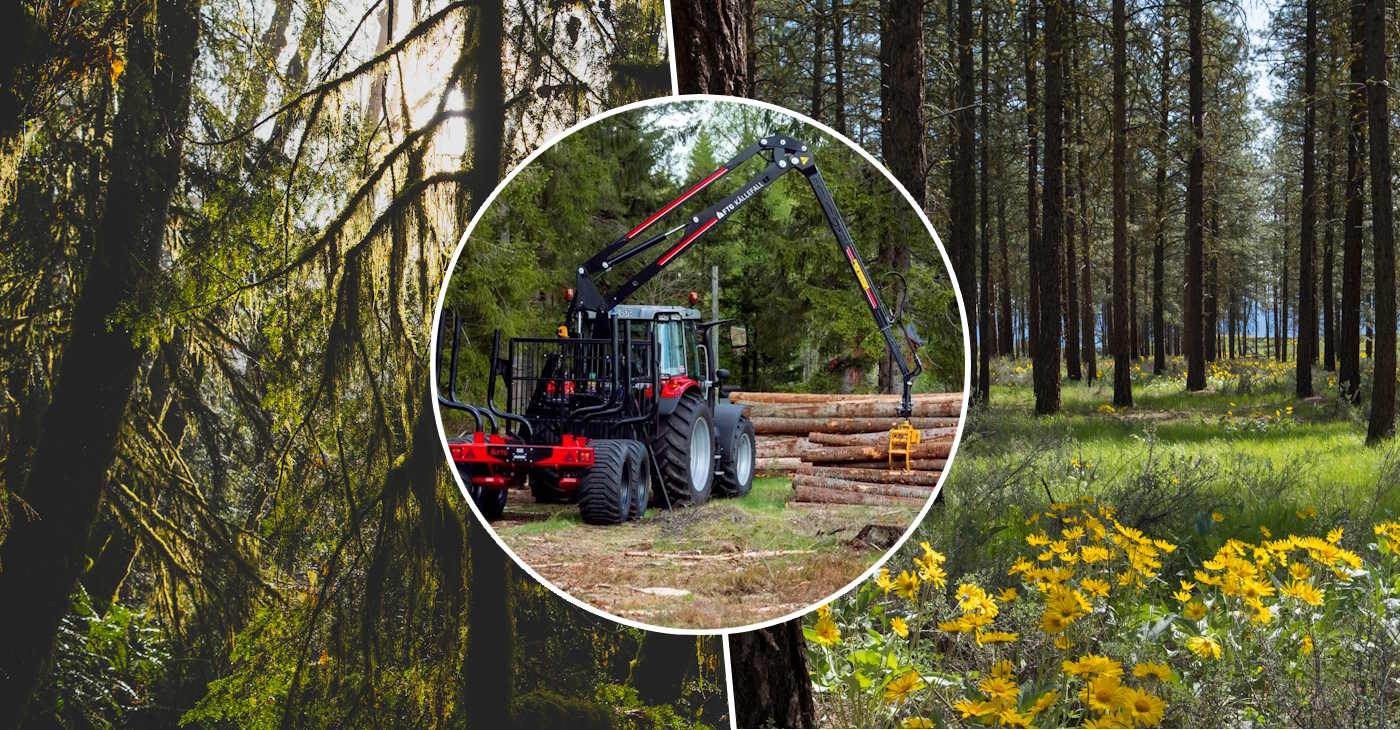
Did you know? If forests around the world were left entirely untamed – allowed to basically grow wild without any form of logging – the result would not simply be “more nature” in a beneficial sense. Instead, many forest ecosystems would actually become increasingly dense, structurally imbalanced, and in some regions more vulnerable to disease, pest outbreaks, and catastrophic wildfires. While certain untouched forests (often called primary or old-growth forests) are of course ecologically invaluable, the majority of managed forests today are part of dynamic systems that rely on periodic harvesting to maintain both ecological function and economic viability. As a matter of fact: without logging, forests would not disappear – but the importance here, is that many would change in ways that reduce biodiversity resilience, increase risk, and limit their usefulness to society.
Logging a forest vs deforesting – what’s the difference?
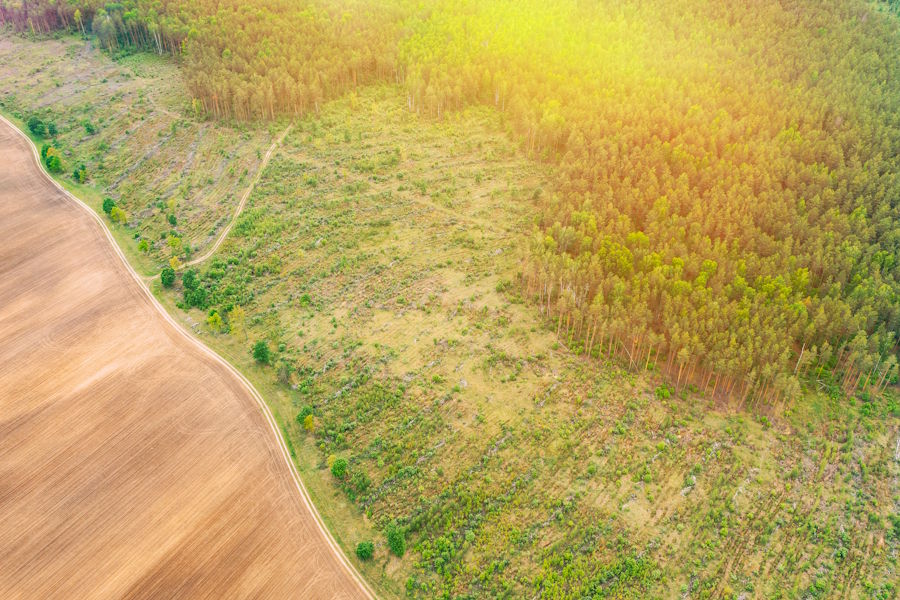
A critical distinction often misunderstood in public discourse is the difference between logging (forest management) and deforestation (land-use change).
Logging is the case of selective or systematic harvesting of trees within a forest that remains classified as forest land. After logging, the area is typically replanted or naturally regenerated. The goal is cyclical production – harvest, regrow, harvest again. Just like a cornfield, but on a different scale of course!
Deforestation, by contrast, is actually the permanent removal of forest cover to convert land into agriculture, infrastructure, or urban development. Once deforested, the land no longer functions as a forest ecosystem. It is gone with the wind, one might say.
From a technical standpoint, sustainable logging operates within frameworks such as continuous cover forestry, clear-cutting with replanting, or selective thinning, all governed by regulations and certification systems (e.g., FSC or PEFC). Deforestation, however, is a death sentence of the land’s ecological identity.
Here’s why logging forests are of importance
Logging forests serves multiple interlinked purposes across ecological, economic, and societal domains, which all are of rather great importance. At its core, it’s about resource optimization and ecosystem management.
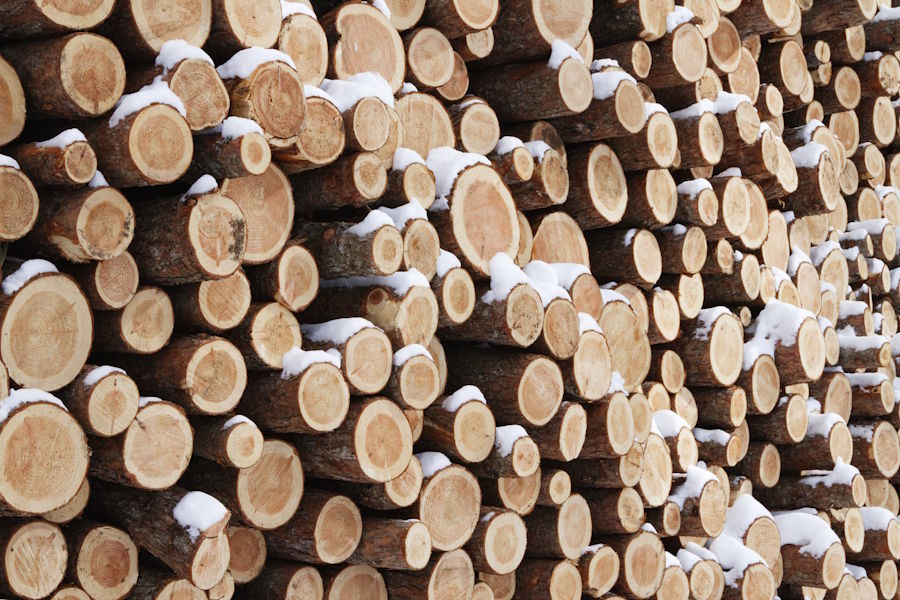
First, logging enables the production of renewable raw materials such as timber, pulp, and biomass. Wood remains one of the few large-scale renewable construction materials with a relatively low carbon footprint compared to steel or concrete.
Second, managed logging contributes to forest health. Removing mature or diseased trees reduces competition for light, water, and nutrients, allowing younger trees to thrive. This process can also limit the spread of pathogens and invasive species.
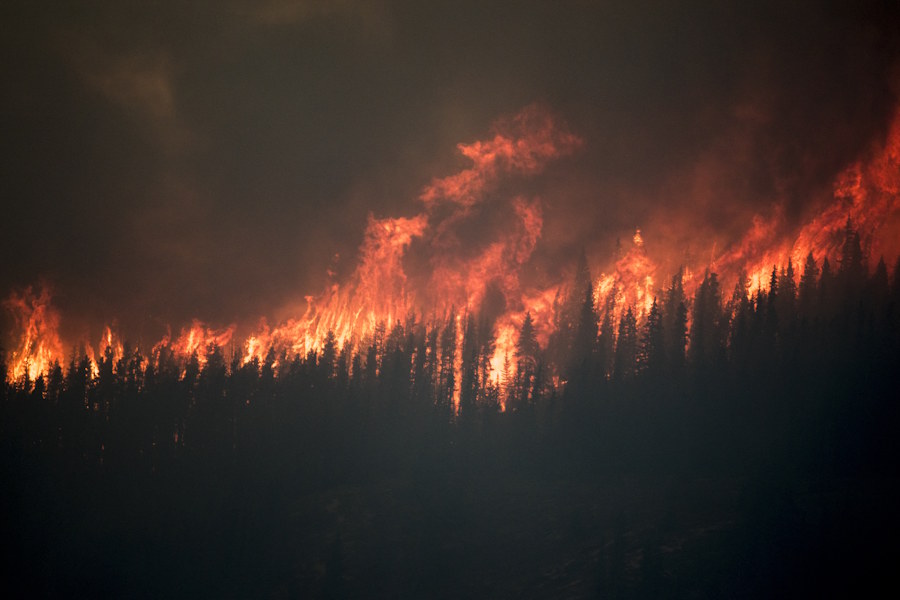
Third, harvesting a forest plays a role in fire risk mitigation, particularly in boreal and temperate forests. Dense, unmanaged forests accumulate large amounts of combustible material, increasing the likelihood of high-intensity wildfires. This can be devastating!
Fourth, there is a strong economic incentive. Forestry supports rural employment, industrial supply chains, and export markets. In many countries, it is a cornerstone of regional economies.
Fifth and finally! Logging contributes to carbon cycle dynamics. While harvesting removes trees, regrowth absorbs carbon dioxide at high rates, especially in young, rapidly growing stands. When wood is used in long-lived products (e.g., buildings), carbon is effectively stored for decades.
Which forestry machines are used today for logging?
Modern logging is highly mechanized, relying on specific equipment designed with efficiency, safety, and precision in mind, over decades of development. The most commonly used machines include these:
Harvesters
Multi-functional machines capable of felling, delimbing, and cutting trees into logs in a single operation! They are equipped with advanced computer systems that optimize log length and quality.
Chainsaws
Still widely used in smaller-scale operations or in terrain where heavy machinery cannot really reach or operate in a good way.
Axes
In some hobbies, not for any type of forestry regarding actual work..
Timber trailers and cranes
Used in combination with tractors or trucks to load and transport timber. There are many upsides with these compared to forwarders, as they are both cheaper and let’s you use the tractor for other tasks when not in the forest.
Forwarders
Vehicles used to transport cut logs from the forest to roadside collection points without dragging them, minimizing soil disturbance. In contrast to logging trailers with crane, which is pulled by a tractor, these machines are all-in-one, so to speak, but a lot pricier.
Skidders
Machines that drag logs from the felling site to a central location, more common in certain logging systems.
Technological advancements such as GPS-based planning, telematics, and automation have significantly improved productivity and reduced environmental impact. Operators today often rely on real-time data to optimize harvesting patterns and minimize waste.

Growing it back – over and over again!
The time required for a forest to reach harvest maturity – often called the rotation period – varies quite widely depending on species, climate, and management objectives.
In boreal regions (e.g., Scandinavia and Canada), rotation periods typically range from 60 to 120 years for species like spruce and pine. In temperate zones, fast-growing species may be harvested in 30 to 60 years, while tropical plantations (e.g., eucalyptus) can be harvested in as little as 7 to 20 years!
After logging is performed, several regeneration strategies may be employed:
- Natural regeneration, where seeds from remaining trees or soil seed banks repopulate the area.
- Artificial regeneration, involving planting seedlings to ensure species composition and density.
- Site preparation, such as soil scarification, to improve seedling establishment.
Modern forestry emphasizes sustainable yield, meaning that the volume of timber harvested does not exceed the forest’s long-term growth capacity.
The most commonly logged forests
Boreal and temperate forests are actually the most commonly logged forests, mainly because they are more accessible, better regulated, and composed of commercially valuable species.
For example, boreal forests, dominated by conifers like spruce, pine, and fir, are extensively logged in countries such as Sweden, Finland, Canada, and Russia. These regions are known for highly mechanized and regulated forestry systems.
Temperate forests, found in parts of Europe, North America, and East Asia, also contribute significantly to timber production, often with a mix of hardwood and softwood species.
Also, tropical forests are logged as well, particularly in regions like Brazil, Indonesia, and parts of Central Africa, but these operations are more controversial due to their association with deforestation and biodiversity loss.
Around the world, major forestry producers include countries such as:
- Canada
- United States
- Russia
- Sweden and Finland
- Brazil
- China
These countries collectively account for a substantial share of global timber output and forest product exports.
Scenario: What would happen if we stopped logging for 100 years?
If logging were halted globally for “only” a century, the consequences would be quite enormous, but also region-dependent.
Ecologically, some forests would transition toward old-growth conditions, increasing structural complexity and biodiversity in certain contexts. However, in many managed forests, especially monoculture plantations, the absence of intervention could lead to overcrowding, reduced growth rates, and increased susceptibility to pests and diseases.
Fuel accumulation would likely result in more severe wildfires, particularly in fire-prone regions. Additionally, the lack of thinning would by fact reduce forest resilience to climate stressors such as drought.
Economically, the impact would be profound. The global supply of timber, paper, and wood-based products would collapse, leading to increased reliance on non-renewable materials like plastics, steel, and concrete. This substitution could paradoxically increase overall carbon emissions.
Also, if we look at it from a societal perspective, millions of jobs linked to forestry, logistics, and manufacturing would unfortunately be affected. Entire regional economies – especially in Scandinavia, Canada, and parts of Eastern Europe – would face structural disruption.
10,000 years in the making!
Our interaction with forests dates back tens of thousands of years, but systematic logging began with the rise of agricultural societies around 10,000 years ago. Early logging was primarily for firewood, shelter, and tools.
Large-scale logging emerged during classical antiquity, when civilizations such as the Romans exploited forests for shipbuilding and construction. However, the true industrialization of logging occurred during the 18th and 19th centuries, driven by:
- The Industrial Revolution
- Expansion of railways
- Urbanization and construction demands
Steam-powered sawmills, followed by mechanized equipment in the 20th century, transformed logging into a highly efficient industrial sector. Today, digitalization and automation represent the latest phase in its evolution.
How large is the forestry industry today?
Forestry is a major component of the global economy. The broader forest products industry, which includes logging, sawmilling, pulp and paper, and wood-based manufacturing, is valued at hundreds of billions of dollars annually.
Globally, the sector contributes significantly to, for instance:
- GDP in forest-rich countries
- Employment, particularly in rural areas
- Trade, with timber and paper products among the most widely traded commodities
Here in Europe alone, the forest-based sector employs millions of people and generates substantial export revenue. Sweden and Finland, for example, derive a notable portion of their industrial output from forestry-related activities.
Moreover, forestry plays a strategic role in the transition toward a bio-based economy, where renewable biological resources replace fossil-based materials.
Let’s put the chainsaw aside and summarize
Logging forests, of course when conducted sustainably, is not the same as destroying them – it is a form of active ecosystem management that balances ecological health with economic utility. Without logging, many forests would become overgrown, less resilient, and more prone to disturbances such as fires and disease.
The distinction between logging and deforestation is of great importance: one maintains forests as renewable systems, while the other eliminates them entirely. Modern forestry relies on advanced machinery and scientific planning to optimize both productivity and environmental impact.
Forests require decades to mature, and careful regeneration ensures that harvested areas continue to function as forests. Boreal and temperate regions dominate global logging, with countries like Canada, Sweden, and Russia leading production.
If logging ceased entirely, the consequences would extend far beyond forests – affecting global industries, climate dynamics, and economic systems. Historically, logging has evolved from small-scale subsistence activity to a technologically advanced global industry worth hundreds of billions.
Last but not least, the importance of logging forests lies in its ability to provide renewable materials, support economies, and maintain forest ecosystems – provided it is done responsibly, with long-term sustainability in mind. Something to think about when reading the newspaper in physical format, sitting on that chair, lying in the sofa, etc., which all are most likely made from wood. 🙂